The stage is set for the biggest FIFA World Cup in history. On December 5, 2025, the glittering draw ceremony for the FIFA World Cup 2026 took place at the Kennedy Center in Washington D.C., finally answering the question on every soccer fan’s mind: who will play who? In a night filled with star power, surprising moments, and the revelation of the groups for the expanded 48-team tournament, the path to glory for all nations was laid out. The headline? Defending champion Argentina, led by the iconic Lionel Messi, will begin their title defense against Algeria.
The Spotlight Moment: How the FIFA World Cup 2026 Draw Unfolded
The ceremony was a true North American spectacle, blending sports, politics, and entertainment in a way only this continent can. Hosted by the dynamic duo of comedian Kevin Hart and model Heidi Klum, the evening kicked off with performances by Robbie Williams and Nicole Scherzinger.
A significant early moment saw FIFA President Gianni Infantino award the inaugural “FIFA Peace Prize 2025” to U.S. President Donald Trump, who was in attendance with First Lady Melania Trump. “Truly one of the great honors of my life,” President Trump stated, thanking the co-hosting nations for their partnership.
The political leaders of the three host nations were central to the proceedings. Mexico President Claudia Sheinbaum Pardo, Canadian Prime Minister Mark Carney, and President Trump assisted in the draw, officially placing their nations into predetermined groups: Mexico in Group A, Canada in Group B, and the United States in Group D.
But the real drama came when legendary North American sports figures took the stage to pull the balls from the pots. NFL great Tom Brady drew Pot 1, NBA icon Shaquille O’Neal handled Pot 2, and other stars like MLB’s Aaron Judge and the NHL’s Wayne Gretzky also participated.
The Pots and The Process: Understanding the 2026 Draw Mechanics
For the first time, the FIFA World Cup draw featured 48 teams split into four pots of 12. The groups, labeled A through L, would each contain one team from each pot.
Here’s a quick look at how the pots were structured based on FIFA rankings (with rankings noted):
-
Pot 1: The top-ranked nations plus the three hosts.
-
Spain (1), Argentina (2), France (3), England (4), Brazil (5), Portugal (6), Netherlands (7), Belgium (8), Germany (9), United States (14), Mexico (15), Canada (27).
-
-
Pot 2: The next tier of strong international sides.
-
Croatia (10), Morocco (11), Colombia (13), Uruguay (16), Switzerland (17), Japan (18), Senegal (19), Iran (20), South Korea (22), Ecuador (23), Austria (24), Australia (26).
-
-
Pot 3: Teams that have consistently qualified and posed tough challenges.
-
Norway (29), Panama (30), Egypt (34), Algeria (35), Scotland (36), Paraguay (39), Tunisia (40), Ivory Coast (42), Uzbekistan (60), Qatar (51), Saudi Arabia (60), South Africa (61).
-
-
Pot 4: Lower-ranked qualifiers and the all-important playoff placeholders.
-
Jordan (66), Cape Verde (68), Ghana (72), Curaçao (82), Haiti (84), New Zealand (86), plus six playoff winners: UEFA Playoff A, B, C, D and FIFA Playoff 1 & 2.
-
Key Draw Rules Remembered:
-
The top four seeds (Spain, Argentina, France, England) were placed to avoid each other until the semifinals.
-
No group could have more than two European teams, and each group had to have at least one.
-
Apart from Europe, no two teams from the same continental confederation could be drawn together.
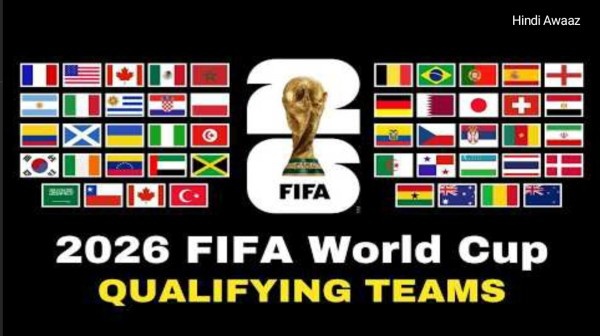
The Groups: A Deep Dive into the FIFA World Cup 2026 Draw Results
After all the balls were drawn, here are the complete groups for the 2026 World Cup:
-
Group A: Mexico (Host), Uruguay, Panama, Ghana
-
Group B: Canada (Host), Morocco, Uzbekistan, UEFA Playoff C
-
Group C: Spain, Japan, Scotland, FIFA Playoff 2
-
Group D: United States (Host), Senegal, Paraguay, UEFA Playoff A
-
Group E: Brazil, Iran, Tunisia, New Zealand
-
Group F: Portugal, South Korea, Qatar, Cape Verde
-
Group G: Netherlands, Switzerland, Saudi Arabia, Haiti
-
Group H: Belgium, Australia, South Africa, Curaçao
-
Group I: Germany, Ecuador, Norway, Jordan
-
Group J: Argentina, Austria, Algeria, FIFA Playoff 1
-
Group K: France, Colombia, Egypt, UEFA Playoff D
-
Group L: England, Croatia, Ivory Coast, UEFA Playoff B
Storylines to Watch After the FIFA World Cup 2026 Draw
1. The Champions’ Path: Argentina’s Title Defense Begins
All eyes are on Lionel Messi and Argentina. Drawn into Group J, they will open their campaign against Algeria—a nation with a rich football history that will be no pushover. Their other confirmed opponents are Austria, a solid European side. The final slot will be filled by the winner of FIFA Playoff 1. For Messi, this tournament could be a final, fairytale bow on the global stage, and the draw has given Argentina a manageable but respectful start.
Also Read – Samsung Galaxy Z Trifold: A new history of foldable technology, this phone with 10-inch screen and 200MP camera is here!
2. Host Nation Ambitions: The USA’s Promising Route
The United States Men’s National Team (USMNT) will feel cautiously optimistic. In Group D, they open against Paraguay on June 12 at the spectacular SoFi Stadium in Inglewood, California. They then face Senegal—a physically formidable African champion—in Seattle on June 18. Their final group match is back at SoFi against the winner of UEFA Playoff A. This is a crucial unknown: that playoff could feature a giant like Italy (ranked 12th), who failed to auto-qualify. The US will be hoping for a kinder opponent to smooth their path to the knockout rounds.
3. The North American Hosts’ Challenges
-
Mexico (Group A) has a tough draw against Uruguay, a perennial South American powerhouse, along with Panama and Ghana. It’s a group with no easy games.
-
Canada (Group B) will fancy their chances against Morocco (a 2022 semifinalist, but a different challenge on this side of the Atlantic), Uzbekistan, and a UEFA playoff team. Home support could be the key to progression.
4. The “Group of Intrigue”: UEFA Playoff Drama
Several groups have a “TBD” slot that adds massive suspense. Group D (USA’s group) and Group L (England’s group) are particularly intriguing because their playoff winners could be a top European nation like Italy, Sweden, or Ukraine. These placeholders make pre-tournament predictions thrillingly difficult.
5. Heavyweights on Alert
-
Spain faces a potentially tricky test from Japan and Scotland in Group C.
-
France and Colombia in Group K promises a glamorous, high-quality clash.
-
England will have to be wary of a 2022 semifinal rematch with Croatia in Group L.
The 2026 Tournament: By the Numbers
The FIFA World Cup 2026 is breaking all records:
-
48 Teams: Up from 32, meaning more nations, more stories, and more global representation.
-
104 Matches: A significant increase, promising a month-long festival of football.
-
16 Host Cities: Spread across the United States (11 venues), Canada (2), and Mexico (3). From Los Angeles to Toronto to Mexico City, the continent is ready.
-
First 3-Nation Host: A historic collaborative effort in organization and culture.
What Happens Next? The Road to Kick-Off
The FIFA World Cup 2026 draw is just the beginning. The final pieces of the puzzle will fall into place on March 31, 2026, when the six remaining playoff berths are decided. Fans will then spend the next months analyzing every fixture, planning their travels, and dreaming of glory.
For the teams, the preparation begins in earnest. Tactical plans will be drawn up around specific opponents, friendly matches will be scheduled, and the final rosters will be selected.
Frequently Asked Questions (FAQs) About FIFA World Cup 2026
About the Tournament Format
Q1: How many teams will participate in the 2026 World Cup?
A: The 2026 FIFA World Cup will feature 48 teams, a significant expansion from the previous 32-team format. This is the first time this many nations will compete for football’s ultimate prize.
Q2: What is the new format for the 48 teams?
A: The 48 teams will be divided into 12 groups of 4 teams each. The top two teams from each group (24 total) will automatically advance to the knockout stage. They will be joined by the 8 best third-placed teams from all groups. This means the knockout stage will begin with a Round of 32 for the first time in World Cup history.
Q3: How many total matches will be played?
A: A record 104 matches will be played throughout the tournament, compared to 64 matches in the 2022 edition. This means more football, more drama, and more opportunities for upsets.
Q4: How many teams were confirmed at the time of the draw?
A: At the time of the draw, 42 of the 48 teams were already known. The remaining 6 spots will be decided through playoffs, with the final qualifiers determined by March 31, 2026.
About Hosting and Schedule
Q5: Who is hosting the 2026 FIFA World Cup?
A: For the first time ever, three nations are jointly hosting the tournament: the United States (11 stadiums), Canada (2 stadiums), and Mexico (3 stadiums).
Q6: Where and when is the Opening Match?
A: The tournament will kick off with the Opening Match on June 11, 2026, at the iconic Estadio Azteca in Mexico City. This will make it the first stadium ever to host three FIFA World Cup tournaments (1970, 1986, 2026).
Q7: Where will the Final be held?
A: The World Cup Final is scheduled for July 19, 2026, at MetLife Stadium in East Rutherford, New Jersey, USA.
Q8: When and where is Team USA’s first match?
A: The United States Men’s National Team (USMNT) will begin their campaign on June 12, 2026, against Paraguay at the SoFi Stadium in Inglewood, California.
Q9: What are the key host cities and stadiums?
A: Some of the marquee venues include:
-
USA: SoFi Stadium (Los Angeles), MetLife Stadium (New York/New Jersey), AT&T Stadium (Dallas), Mercedes-Benz Stadium (Atlanta).
-
Canada: BMO Field (Toronto), BC Place (Vancouver).
-
Mexico: Estadio Azteca (Mexico City), Estadio BBVA (Monterrey).
About Qualifications and Teams
Q10: Which big team is still in the playoffs and could be a threat?
A: The most notable team yet to qualify is Italy (FIFA Rank #12), the four-time champion. They are in the running for the UEFA Playoff A spot, which is in Group D with the USA. Their potential qualification would dramatically change the dynamics of that group.
Q11: What do “UEFA Playoff” and “FIFA Playoff” mean in the groups?
A: These are placeholders for the final qualifying spots:
-
UEFA Playoffs A, B, C, D: Four spots for European teams from a separate playoff path. These could include teams like Italy, Sweden, Ukraine, or Wales.
-
FIFA Playoff 1 & 2: Two inter-confederation playoff spots open to teams from Asia, Africa, Oceania, North America, and South America.